Episode 4 - 6
Welcome to Trident Talks
Watch the latest instalments of the video series, where we aim to answer all your questions about planet-first energy.
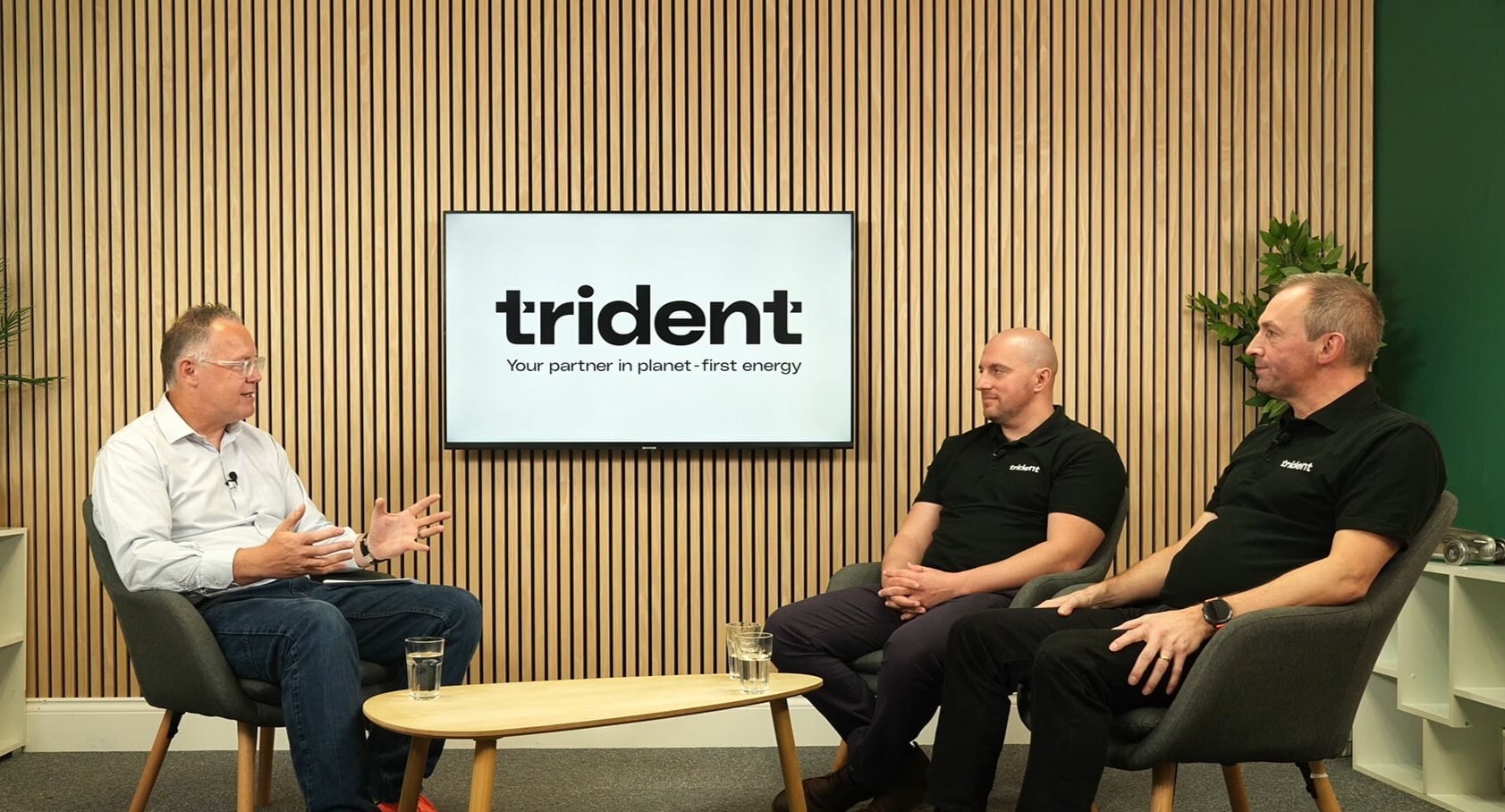
Managing Director, Michael Dugdale is joined by Head of Client Services, Andy Curry talking through the latest energy trends.
Across Episodes 4, 5, and 6 of Trident Talks, one message comes through clearly: the businesses that thrive in today’s energy landscape are the ones that stop treating energy as a background cost and start managing it like a strategic lever.
Episode 4: Taking control in a changing market
Energy markets will always move, but the difference is whether your business is reacting to price shocks or steering with data.
This episode breaks down what “control” actually looks like in practice, and how to avoid nasty surprises and unlock growth opportunities.
What you'll learn...
-
Data is king: The businesses that stay in control are the ones with a clear operational grip on energy data across the organisation.
-
Plan early to avoid surprises: Don’t treat your renewal like a one-day gamble, achieving better outcomes comes from forward-planning and informed decision-making.
-
Your bill is more than the unit rate: Non-energy and non-commodity costs (such as networks, levies, transmission) are rising fast, so they need managing, not ignoring.
Episode 5: Regulation as a roadmap
Most businesses see energy legislation as a headache. This episode reframes it as something better: a structured way to find savings, reduce waste, and prove progress without adding chaos to your workload.
What you'll learn...
-
ESOS is an opportunity, not admin: It’s designed to uncover energy-saving improvements and remove waste from your operation.
-
Action plans turn reporting into results: Energy action plans exist to ensure the opportunities identified are actually delivered year on year.
-
Forensic checks can unlock major savings: Billing, metering, and charging structures often hide avoidable costs, but fixing them can release serious cash back into the business.
Episode 6: Where sustainability meets business efficiency
Net zero doesn’t have to be a cost centre. This episode shows how sustainability, done properly, is a route to operational efficiency, cost reduction, stronger financial options, and long-term business resilience.
What you'll learn...
-
Net zero roadmaps uncover commercial value: Looking end-to-end across operations exposes inefficiencies and savings opportunities you’d otherwise miss.
-
Efficiency beats “cheapest energy”: The cheapest kilowatt hour is the one you don’t use, reducing waste delivers immediate, measurable impact.
-
People & systems drive outcomes: Culture matters, but optimising controls and infrastructure (like building management systems) often delivers the biggest wins.
A summary
Episode 4, Taking control in a changing market, focuses on why “control” matters more than prediction. Energy markets are influenced by global events, weather patterns, and the pace of change in generation, and that volatility isn’t going away. The practical response isn’t panic; it’s preparation. Control begins with reliable, well-structured data and a clear view of how energy is used across sites and operations. It also means planning well ahead of contract renewal dates rather than leaving decisions to last-minute pressure.
The episode highlights that stability can be more valuable than chasing the lowest price, especially for businesses that need predictable budgets. It also underlines a major blind spot: many businesses fixate on the unit rate, even though non-commodity costs (network charges, transmission, levies and infrastructure costs) are becoming an increasingly large part of the bill.
Episode 5, Regulation as a roadmap, reframes compliance as a business advantage. ESOS and SECR aren’t just hoops to jump through, they are structured mechanisms for identifying energy-saving opportunities and improving efficiency. The point isn’t to file reports and move on; it’s to turn findings into action. With energy action plans and annual reporting expectations tightening, businesses are being pushed toward real delivery, not box-ticking.
The episode also highlights a hard truth: billing and charging errors are common, not because suppliers are acting unlawfully, but because the charging landscape changes quickly and contracts, metering arrangements, and network positions don’t always keep pace. A forensic review of bills, metering, and cost structures can reveal substantial savings, which can then be reinvested in longer-term resilience measures.
Episode 6, Where sustainability meets business efficiency, connects the dots between net zero and commercial performance. Net zero shouldn’t be viewed purely as a cost; done well, it is a framework for uncovering operational waste, reducing energy use, strengthening brand and stakeholder confidence, and improving access to finance.
The discussion emphasises that progress doesn’t have to start with massive capital projects, but practical actions, paired with good controls and behaviour change, can deliver meaningful results. It also highlights the growing link between sustainability credibility and business viability: talent attraction, supply chain requirements, and even lending decisions increasingly depend on having a clear roadmap and tangible progress.
Together, the three episodes show a clear path forward: get a grip on data, plan proactively, treat regulation as a driver for improvement, and use sustainability as a route to efficiency and resilience, not just a reporting obligation.
Contact us
Let's discuss your opportunities
If you want to discuss how you can make the most of a constantly changing market, or use regulation as a roadmap for success, get in touch with us today. We're happy to talk through your day-to-day challenges. Fill in the query form, and we’ll be right on it.
Contact us